
The Promise, launched in 2020, is the commitment made to our children and young people after the largest ever review in Scotland of our care system. The aim is to create equity across the lives of all our children and young people, working to give everyone the best start in life and the best opportunities possible.

The Promise sits alongside Corporate Parenting legislation that was already in place. As we work to deliver on The Promise, it is important for all of us who work with children and young people to understand the Corporate Parenting responsibilities that are in place.
Corporate Parenting, set by the Scottish Government’s Children and Young People (Scotland) Act 2014, is defined as ‘the formal and local partnerships between all services responsible for working together to meet the needs of looked after children, young people and care leavers’.
The Act introduced new duties and responsibilities for Scottish public bodies, defined as Corporate Parents, effective from April 2015. A good Corporate Parent will want the best outcomes for their looked after children, accept responsibility for them and make their needs a priority, ideally in the same way they would do for their own child or family member.
Guidance on Corporate Parenting sets out a group of ‘six duties’. These ‘duties’, when considered in terms of parenting, should really encourage us to ask ourselves if the support we are offering would be good enough for a child of our own.
The paramount purpose and central role of a Corporate Parent is to create equity of opportunity for the children, young people and young adults we care for. If one considers the Igbo Proverb that suggests ‘it takes a village to raise a child’, there is a connotation of collective responsibility, of family, connection and community contained within this.
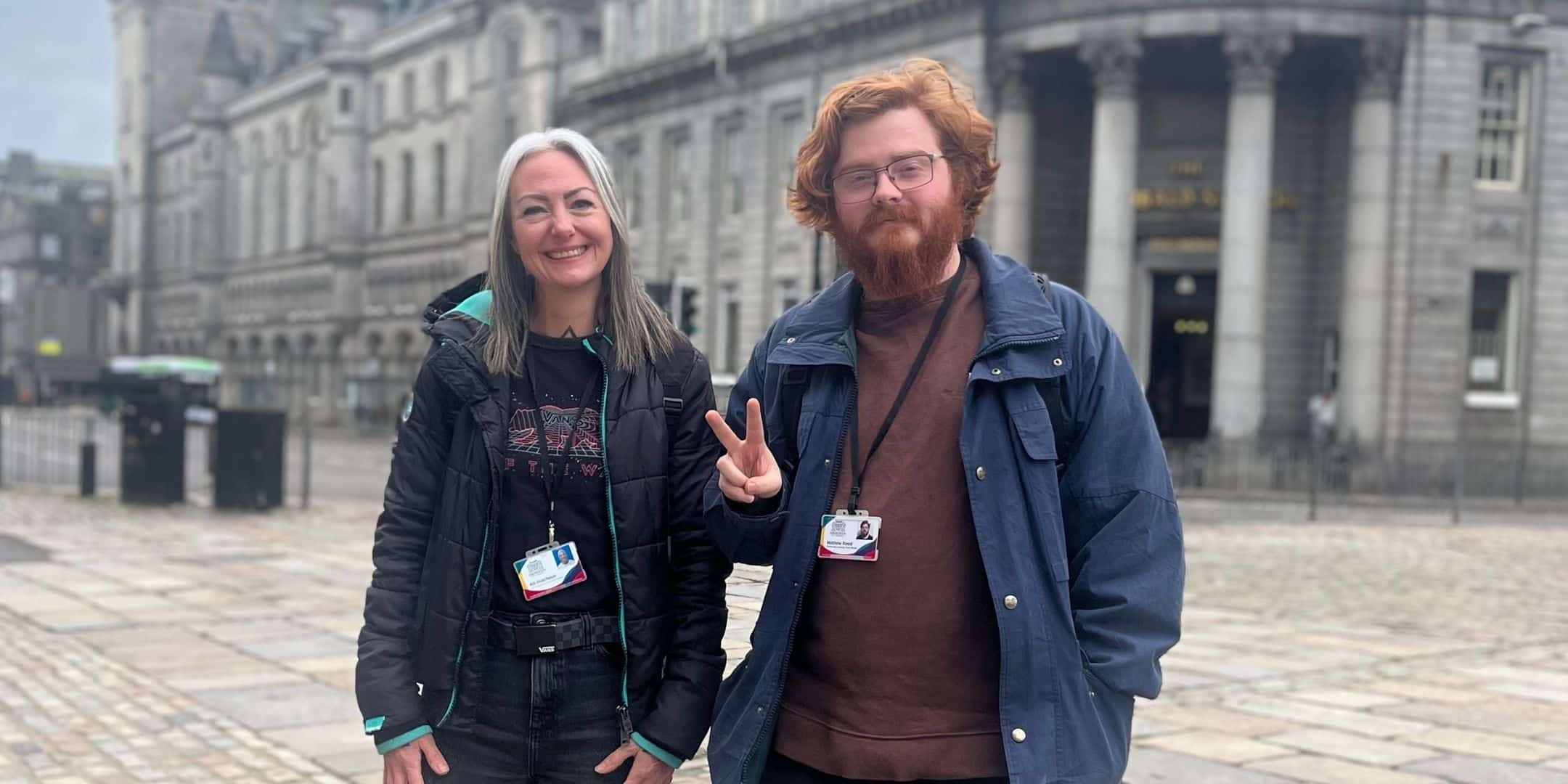
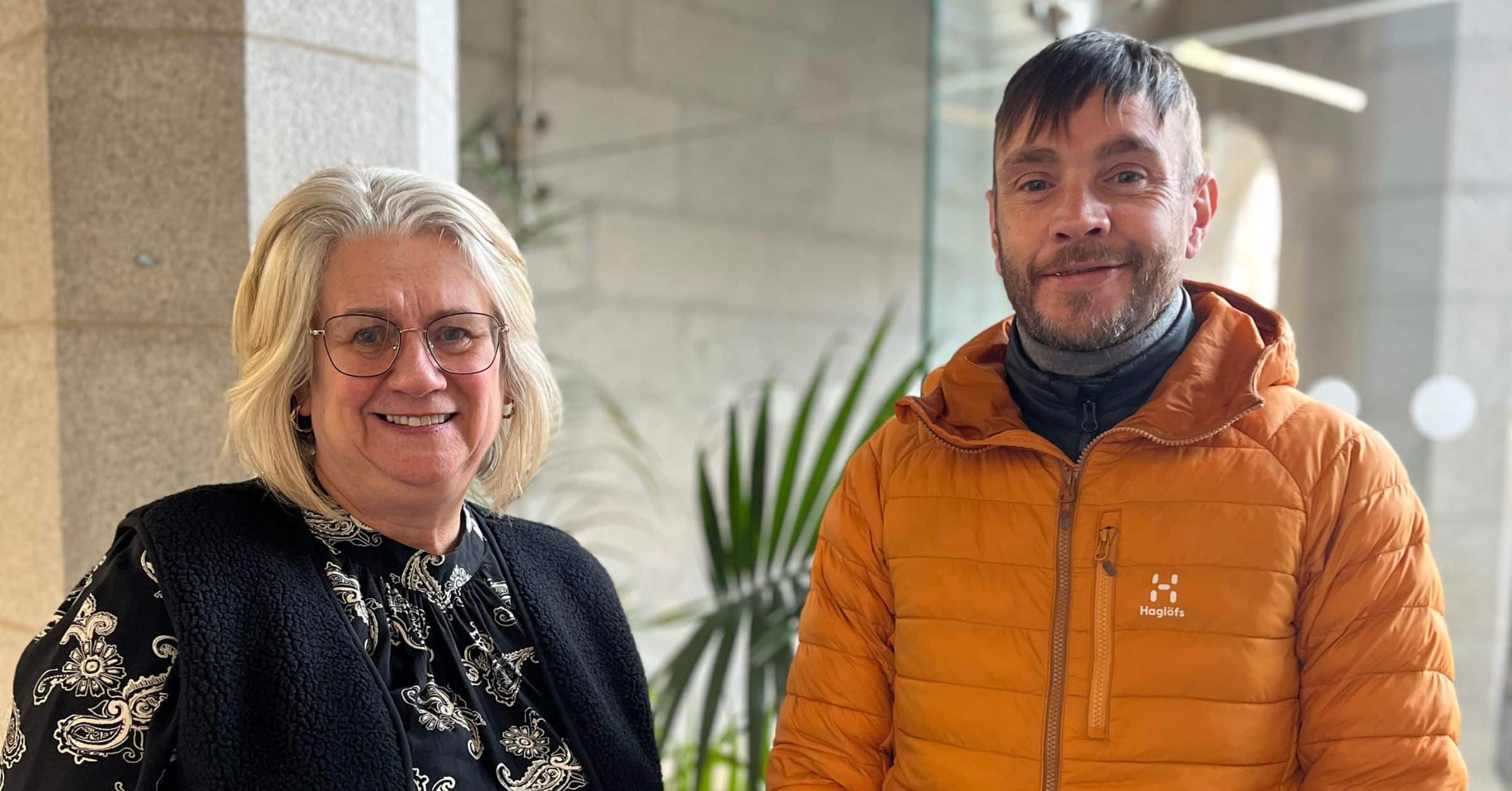
Gette Cobban, ACVO’s Senior Development Officer (The Promise), met with Kris O’Mahoney, Principal Planning & Development Officer within Aberdeen City Council, to find out more about the Corporate Parenting work in Aberdeen.
They also discuss the new updated Corporate Parenting training on offer for the third sector workforce, equipping them with the knowledge and skills needed to support care experienced children and young people in the city.
Gette: “Can you tell us a little about our current care system in Aberdeen, how many children we are supporting and how?”
Kris: “Aberdeen City is a small geographical area with a high and dense population for its size. Within the city, the extreme polarization between economic wealth and social exclusionary factors, such as intergenerational poverty, low educational attainment, poor health outcomes and low employment rates, is quite stark.
“All of these factors, either directly or indirectly, are intrinsically linked and feature in the lives of the children and young people we care for.
“We have approximately 470 children and young people in the care system in Aberdeen City. We also have care experienced children and young people who live out with the city in various types of care.
“Types of care can be ‘Looked After at Home’ with parents or family members under the auspices of a legal order, living in a children’s home here in Aberdeen or out of the city, and also in residential care which may have an educational element included.
“Within our community, we also currently have 59 unaccompanied asylum-seeking children and young adults. Having the legal status as looked after children and care leavers, they have an equity of access to local authority and multi-agency supports which we are coproducing with many in the group in appreciation of their particular lived experience.
“Many of these young people have experienced living in places of conflict and extreme deprivations, leading many to experience loss and separation from family. They often require complex support, with community and third sector services well positioned to support their inclusion and a sense of belonging.”
Gette: “This is really interesting. As you point out, this group of care experienced young people is so varied – coming from different backgrounds and receiving different types of supports to suit their needs.
“I know that the city aims to ensure that this group is well supported and receives the best opportunities possible in line with The Promise.
“The Corporate Parenting Performance and Improvement Outcome Group (CPPIG) that we both attend really takes a lead on this. Can you tell us a bit more about this group?”
“The third sector workforce form an important part of the wider community that our care experienced population belong to.”
Kris: “The CPPIG is held on a bi-monthly basis in person at our Westburn Road resource centre.
“This multi-agency group has combined responsibility for the delivery of the Corporate Parenting Plan, collation and monitoring of data and quality assurance in relation to care experienced children and young people.
“It also focuses on delivering the identified aims set out in the LOIP (Local Outcome Improvement Plan) and driving the implementation of The Promise across the Partnership.
“The CPPIG engages with children and young people with care experience and ensures all improvement activity takes full account of their views and lived experiences, fulfilling The Promise by giving them a voice which we listen and respond to attentively.
“Information from there then feeds into the Children’s Services Board, a collective group who have a joint responsibility for ensuring the best possible services are provided for Aberdeen’s children.
“Full information on the LOIP projects for this group can be found on the Community Planning Aberdeen website.
“We currently have a varied membership in the CPPIG representing Children’s Social Work, Health and Social Care Partnership, Housing Services, Police Scotland, with Education and NHS Grampian.
“Our third sector partners include ACVO, Aberdeen Foyer, as well as Children’s Hearings Scotland (CHS) and Sport Aberdeen, along with our representative from The Promise Scotland.
“Our aim in the next quarter is to identify a group member with lived experience of care to join the group, this representation has been vacant for a period.
“It is so important that the CPPIG has a multi-agency membership to ensure that we are all working together to achieve the best supports possible.
“ACVO plays a key role connecting the group with the wider third sector as required and ensuring a strong flow of two-way information.
“Some of these professionals also have responsibilities for LOIP outcome projects related to working towards improved outcomes for our care experienced community, hearing and including their voice and views in the process.”
“I do encourage anyone involved in the third sector to consider taking this training, to continue our hard work towards keeping The Promise and to ensure children and young people grow up loved, safe and respected.”
Gette: “I can see from sitting on the CPPIG the importance of gathering the different sectors together to pull on the shared knowledge, experience and also recognising the different relationships each has with the children, young people and their families. Each sector brings something significant for our care experienced young people.
“This leads me to ask you about the multi-agency Corporate Parenting training. We talked about the updated training a few weeks ago and I gathered some baseline demand for you among my third sector contacts.
“You tell me that uptake hasn’t been strong from the third sector, do you think this could be because organisations still think of Corporate Parenting as a statutory responsibility?”
Kris: “Perhaps, but the third sector workforce form an important part of the wider community that our care experienced population belong to.
“They have a vital role in creating and maintaining an extended sense of community and belonging. This may include types of scaffolding and support available, learning new skills, hobby/interest-based groups or social opportunities.
“This must reach beyond the statutory social work and local authority services, to include third sector organisations. To create and forge such communities and sense of belonging, we must work together and place the importance on relationships at the heart of our practice.
Gette: “I agree that we all play a vital role in the support available, what would you say is in the Corporate Parenting training that would benefit third sector colleagues?”
Kris: “As part of the training, it is important to understand the use of appropriate language and specific terminology when you are in the role of a Corporate Parent.
“For example, ‘Care Leaver’ describes a young person who was ‘looked after’ on or after their 16th birthday and who is under 26, reflecting their legal entitlement to Throughcare and Aftercare support compared to being ‘care experienced’.
“Getting this terminology correct can make a significant difference and ensure that people get the support they are entitled to as they get older.
“Such understanding is required to create the culture change needed to fulfil The Promise.
“Within the Corporate Parenting training e-module, there are further links to language tools including ‘Each and Every Child’ that aims to build understanding and shift public attitudes around care experience. These documents offer alternative terms often used in and around care settings and planning, chosen by young people themselves as preferred replacements.”
“We have a collective responsibility as Corporate Parents to fulfil The Promise in Aberdeen.”
Gette: “I agree with you that the language we use is so important and that we all have the same common understanding of the issues the families we support have faced and how to best support them. What does the course content include?”
Kris: “The session includes information around ACE’s (Adverse Childhood Experiences), helping us understand better the trauma some of our children, young people and their families may have experienced and how this may affect their life in many different ways.
“The training also includes updated information about The Promise itself and the UN Convention on the Rights of the Child (UNCRC), now embedded in legislation which has had a significant impact for everyone, not just statutory bodies.
“All of the topics highlighted in the training include additional links to provide opportunities for more information and further knowledge.
“After the training, we want people to be asking themselves: ‘Am I a good Corporate Parent for the care experienced children, young people and adults I work with?’; ‘Can we do more or do something different in an improvement context?’, ‘If so, how?’
“Essentially, the training is the first step to understand the background to Corporate Parenting. After undertaking the e-module, third sector workers will think about what their role, team and organisation may enable them to do for looked after children and care leavers here in Aberdeen.
“I do encourage anyone involved in the third sector to consider taking this training, to continue our hard work towards keeping The Promise and to ensure children and young people grow up loved, safe and respected.”
Gette: “Thanks Kris, it’s been really great talking with you. I really get a strong feeling that we are all in this together and we all want the best outcomes for our children, young people and families.
“I will definitely do all I can to encourage third sector colleagues to access the training and in fact have now completed the course myself. Having worked directly with families for most of the last 25 years, I can really see the importance of this training.
“I think it’s a good, basic start for everyone to ensure we are all on the same page, recognising the importance of our individual roles and the importance of us all pulling together as we have a collective responsibility as Corporate Parents to fulfil The Promise in Aberdeen.”
If you are interested in undertaking the training e-module, please visit guestlearn.aberdeencity.gov.uk and create an account. Upon completion, an end of course certificate is issued for staff training folders.
More information about Corporate Parenting can be found at www.aberdeencity.gov.uk/aberdeen-protects
To find out more about The Promise in Aberdeen, visit ACVO’s dedicated webpage at acvo.org.uk/thepromise