
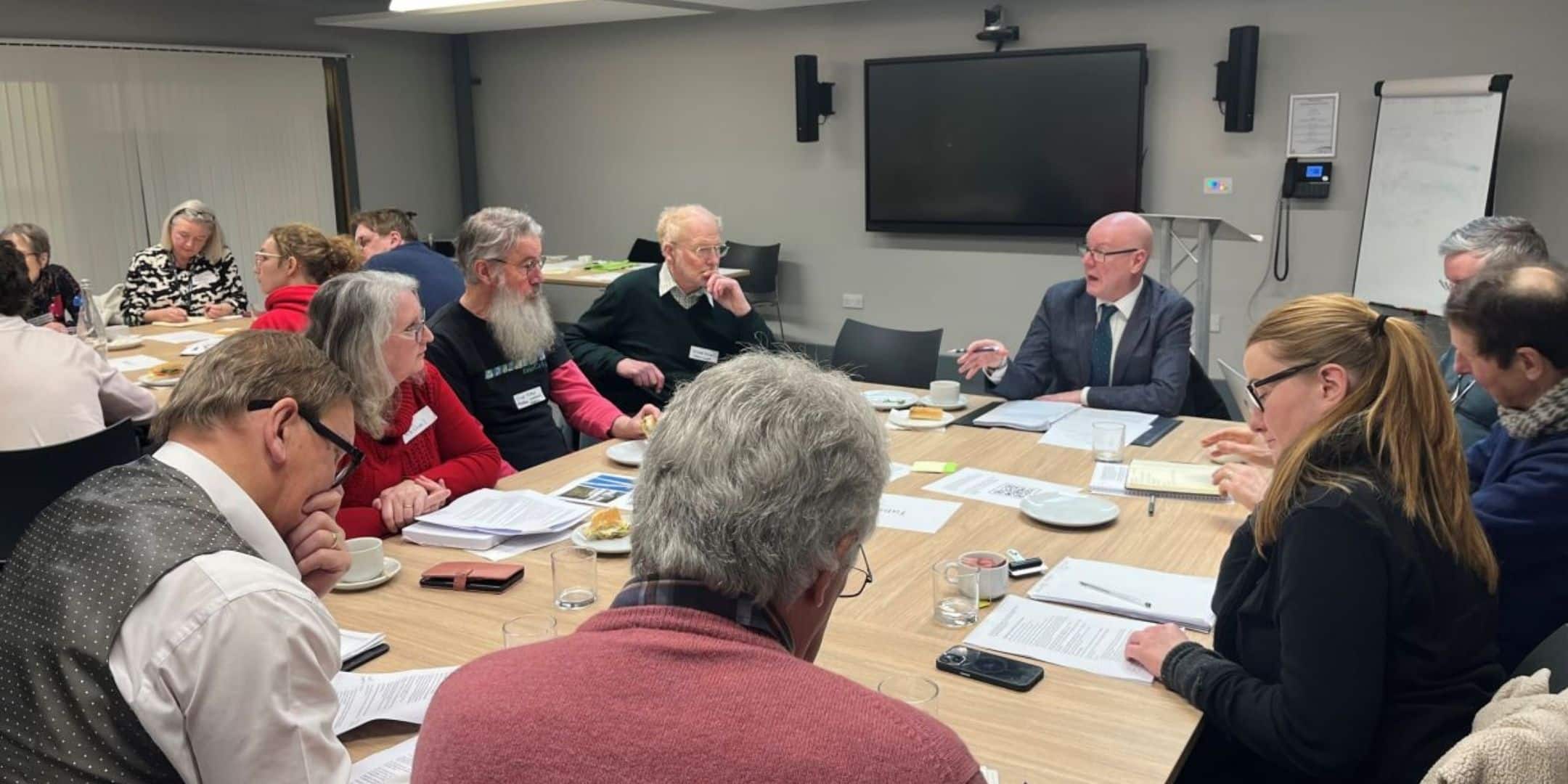
The Scottish Parliaments Net Zero, Energy and Transport Committee visited Aberdeen in January to hear directly from the third sector about the Scottish Government’s Draft Climate Change Plan.
The Government says the Climate Change Plan “is a 15-year plan, covering 2026 to 2040, made to help Scotland reduce the effects of climate change. Scotland has a target to reach zero greenhouse gas emissions by 2045. Net zero means finding a balance between emissions released in the air and those we remove from it, for example by trees absorbing greenhouse gases. The goal is to ensure that our planet remains at a comfortable temperature so that all living things, from planets to animals, can grow and survive.”
A range of voices from across Aberdeen and Aberdeenshire came together at Aberdeen Science Centre to discuss whether the plan presents accessible, relatable climate policy for everyone, whether it considers participatory and community-led solutions, if it is strong on transparency and accountability in climate action and whether it sufficiently considers advice and financial support for households to reach net-zero.
Views across the room varied across the themes, but the key messages were that the needs and feelings of communities need to be central to delivery plans – not just strategy, and that in the complicated landscape of climate change and Just Transition, cost and impact need to be carefully balanced so that it results in benefit rather than burden for communities.
Thank you to Aberdeen Community Energy, Aberdeen Youth Movement, Aboyne Community Trust, Buchan Dial-a-Community Bus, Action for a Fairer World, NESFIT, Cyrenians, Friends of St Fittick’s Park, Grampian Housing Association, Hill of Fare Wind Farm Information Group, Instant Neighbour, Leylodge Against Industrialisation, Stella’s Voice, North East Transport Training, and Udny Climate Action, for all the contributions.
ACVO was pleased to be able to help bring this important part of the Parliament’s scrutiny of the plan to the North East with our colleagues at AVA, NESCAN and the Participation and Communities Team at the Scottish Parliament.